International buyers in Costa Rica: what this opportunity means for real estate agents
International buyers Costa Rica 2026: the FDI macro context, buyer profiles, and how agents prepare to capture this flow professionally.
Market
Costa Rica has MLS systems, but none are mandatory or cover the whole market. How this fragmentation impacts your business and what you can do.
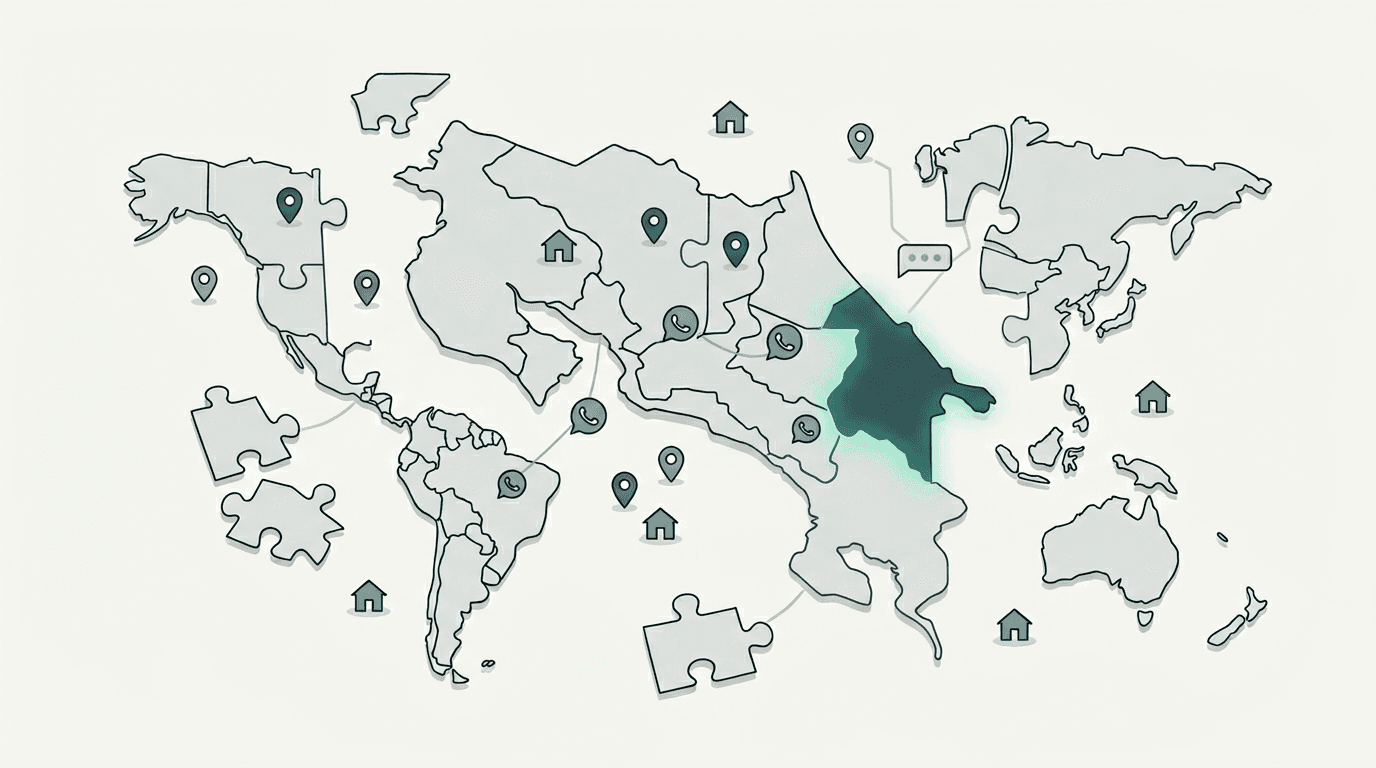
If you've been selling property in Costa Rica for more than a couple of years, you've probably heard the question: does Costa Rica have an MLS? The short answer is yes, systems do exist. OmniMLS launched in 2022 and has been adopted by both CRGAR and the CCCBR. Propertyshelf operates through re.cr. These are real platforms with real listings.
The more honest answer is that none of them work the way agents from the US or Canada would expect. The key difference is that participation is entirely voluntary. Many independent agents and even large brokerages simply don't participate. The result is a system with significant gaps: properties moving through private channels before appearing on any platform, incomplete data, and a fragmentation that none of these tools have fully resolved.
That gap has real consequences for your business as an agent. It also creates an opening most people haven't recognized yet.
The lack of a universal, mandatory MLS continues to force most Costa Rican agents to improvise. WhatsApp groups, private Facebook networks, direct phone calls, personal relationships built over years. These channels work, certainly. But they're slow, inefficient, and entirely dependent on your personal network rather than a system that levels the playing field for everyone.
Consider this: roughly 70% of properties sold in Costa Rica are purchased through agents from different companies. That number should get your attention. When you list a property, the person buying it will very likely be represented by an agent who doesn't work for your brokerage. That's forced collaboration without the infrastructure to support it. Agents learn about properties when someone remembers to share a WhatsApp link or email a photo.
The result shows up in time on market: properties take between 360 and 420 days to sell. Over a year. That's the current reality of the Costa Rican market. When information moves slowly through fragmented channels, visibility suffers. Buyers take longer to find what they want. Sellers sit and wait.
There's more to it. When properties finally do sell, the price typically falls between 5% and 12% below asking. That's not an accident. It's the outcome of asymmetric negotiation, where buyer agents without quick access to alternatives have less leverage. If there's only one property that meets your client's criteria, you have less room to negotiate. If five comparable options were available immediately, the conversation would be fundamentally different.
It's tempting to romanticize the current model. Some agents will tell you their personal networks are their competitive advantage, and in a sense they're right. But that comes with a brutal cost: dependency. Your income is tied to how many people you know, how many agents respond to your messages, and how well organized your own filing system is.
When someone in your WhatsApp group sends 15 photos of a property, where are those photos archived? How does your client search for properties with specific features later? What details get lost in the conversation thread? Agents end up reinventing the wheel constantly: categorizing, organizing, resending information because there's no central place where everything lives.
This isn't a minor inconvenience. It's fundamental friction in your business. Every hour you spend coordinating, searching for information, and chasing colleagues on WhatsApp is an hour you're not spending on what matters: serving clients and closing deals.
In markets with established MLS systems, properties circulate in hours or days. Buyer agents see new listings the moment they're published. Time on market is shorter and more predictable. Prices reflect the actual market better because transparency drives efficiency.
Costa Rica, without that infrastructure, operates at a competitive disadvantage. Agents lose time. Sellers lose money through lower prices and longer selling periods. Buyers get frustrated because they can't see everything that's actually available.
That's where the opening is.
Modern real estate platforms are beginning to fill this gap. The first agents to adopt them don't only get better infrastructure. They get their inventory and their professional presence in order while most of the market is still working out of a chat thread.
If you're one of the first agents in your area working with a platform built to publish quickly and present each property properly, the difference is visible. Your listings are complete, with the price shown and the location on a map. Your inventory stops living in scattered conversations.
This isn't about replacing your personal networks. It's about amplifying them: adding a system that makes your time more productive and your value proposition stronger.
What changes is what you can show a buyer on the first call. Instead of forwarding a screenshot with no price, you send a complete listing page: price, location, photos, and terms in one place. That's what infrastructure does. It changes the quality of the conversation you can have.
The forward-thinking agents in Costa Rica are paying attention to this shift. They're watching how technology reorganizes industries. They're thinking about how to differentiate themselves in a crowded market. And they're asking the right question: what tools make me more efficient now, before everyone adopts them?
IkiHomes is building a platform for exactly this problem. It doesn't compete with the existing MLS systems. It fills in what's missing: a place to publish a property with a visible price, a real map location, and a complete data sheet, without rebuilding the information every time someone asks. The free plan covers up to 10 published listings plus unlimited drafts.
Leave your email. During prelaunch, the first 20 agents on the list receive 2 months of Realtor Pro free.
Join the listNo credit card · Free plan, no expiry

International buyers Costa Rica 2026: the FDI macro context, buyer profiles, and how agents prepare to capture this flow professionally.

Guanacaste real estate market 2026: the price correction, international-buyer profiles, and the operational window for focused agents.

Santa Ana real estate market 2026: data, buyer profiles, and the opportunity for agents positioning early in Costa Rica's quietly growing corridor.